5 Best Science Fiction Movies Nobody Talks About Anymore
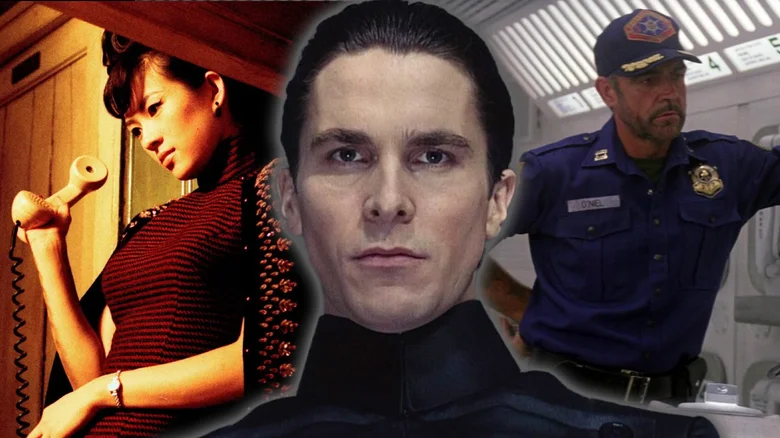
Given the vastness of the science fiction genre throughout cinema history, many films get overlooked. There is no shortage of sci-fi films that deserve greater love, ranging from classics that have lost respect over time to flicks that have always eluded wider understanding. In certain situations, outstanding science fiction films receive poor critical reviews, sentencing them to relative obscurity from the start. Whatever the reason, there are many sci-fi films that need to be properly acknowledged and included in the genre discourse.
We are compiling a list of our favorite sci-fi films whose legacy has not stood the test of time and posting it here. These are films that went unnoticed or just did not have the same pop cultural durability as their more well-known rivals. Whether you prefer spacefaring thrillers or cyberpunk noir, there is an obscure science fiction film for everyone out there.
These are the five best sci-fi movies no one talks about anymore, yet each deserves to be more than a cult classic.
1. Silent Running
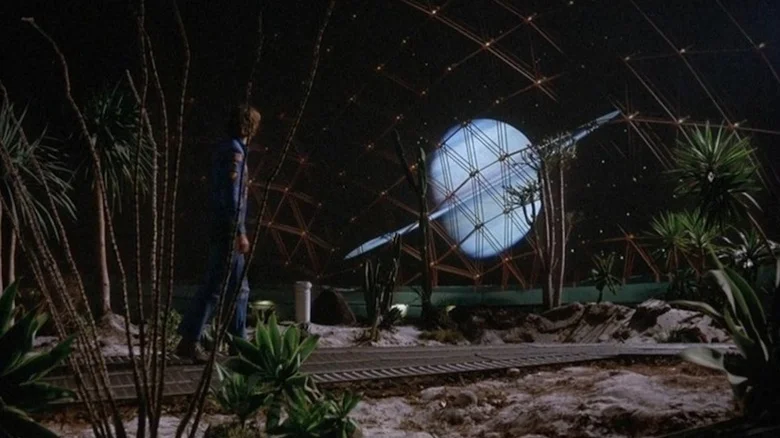
The 1972 sci-fi film "Silent Running" conveys an early and important ecological message about the significance of environmental protection. The film is set in a future where Earth can no longer support trees, forcing humanity to conserve them in biodomes around the solar system. Protagonist Freeman Lowell (Bruce Dern) is a botanist who works in the biodomes of a spaceship circling Saturn with the goal of reforesting Earth. However, when the ship is instructed to destroy the biodomes so that they can be repurposed for commercial use, Lowell takes dramatic measures to defend the ecology.
There is an unsettling atmosphere surrounding "Silent Running," demonstrating how far one will go to protect their fixation, in this case, the environment. Even after the more violent portions of the plot are resolved, this melancholy permeated the film as Lowell isolated himself. Many of these aspects stem from Dern's primarily solo performance, in which he becomes immersed in his craft, with his character going to any length to defend it. Between these concepts, "Silent Running" portrays a wonderfully drawn sci-fi landscape, anchoring its ecological story in an authentically grounded setting.
Outland
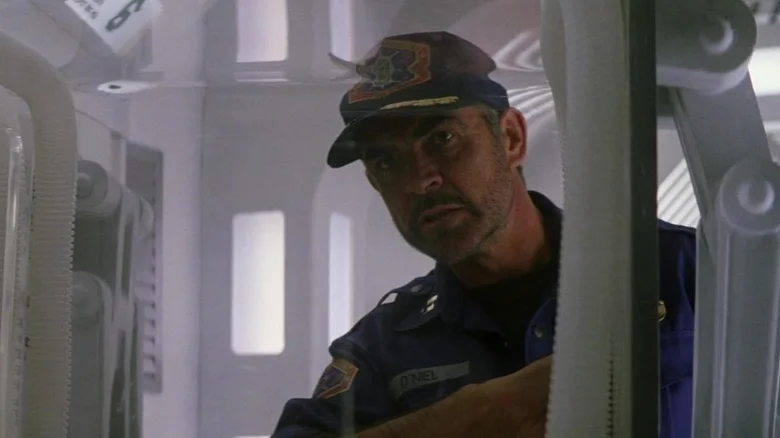
Sean Connery appeared in the 1981 sci-fi Western "Outland," which adapted the conventional gunslinger clichés to a future off-world setting. Connery plays William O'Niel, a marshal tasked with maintaining order at a mining site on the Jovian moon of Io. While mining production has increased dramatically, miners are exhibiting increasingly alarming behavior, such as mental breaks and deadly self-harm. As O'Niel examines the escalating number of events, he discovers a plot involving the mine's business leaders.
"Outland" reflects a slew of great Western films, most notably "High Noon," with its story of a lone lawman up against a ruthless overseer in a rural town. The sci-fi aspects are skillfully integrated, providing a gloomy backdrop while the story's mystery evolves into a full-fledged conflict. Connery is as captivating as ever, adding grizzled determination to his no-nonsense protagonist and appearing more at ease than in his previous sci-fi film, "Zardoz." "Outland" is a no-frills sci-fi action film that delivers on its premise with aplomb.
2010: The Year We Make Contact
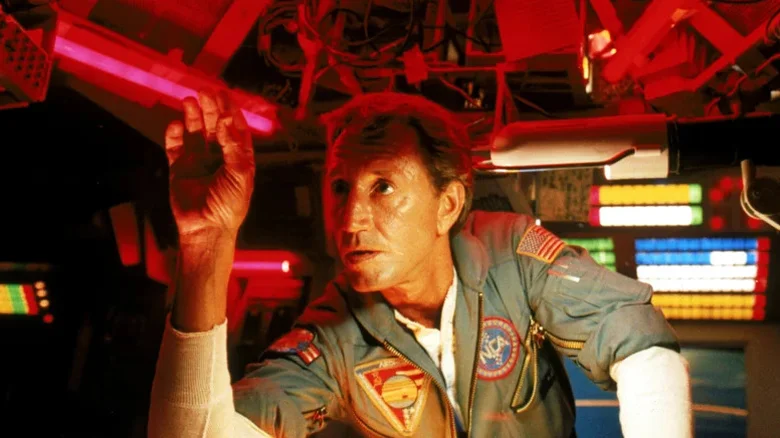
A sequel to "2001: A Space Odyssey" was made, and it is actually pretty nice, despite the fact that it could seem sacrilegious. "2010: The Year We Make Contact" (1984), an adaptation of Arthur C. Clarke's "2010: Odyssey Two," examines the consequences of the previous film. The film centers on a joint American-Soviet expedition to the Jovian moons to find out why HAL 9000 malfunctioned maliciously and turned against the crew of the Discovery. As a result, the operation is impacted when the menacing black monoliths reappear as Cold War tensions reappear on Earth.
Although Stanley Kubrick's "2001: A Space Odyssey" is a rare masterpiece, its 1984 sequel does not diminish its significance. "2010: The Year We Make Contact" addresses some of the main issues raised by the 1968 film and is more approachable than its predecessor. Additionally, by taking use of the renewed Cold War tensions, the film elevates the standard sci-fi spectacle to a level of intrigue. "2010: The Year We Make Contact" is a strong continuation of Kubrick's iconic film and a sequel to a box office success that most people were unaware ever existed.
Strange Days
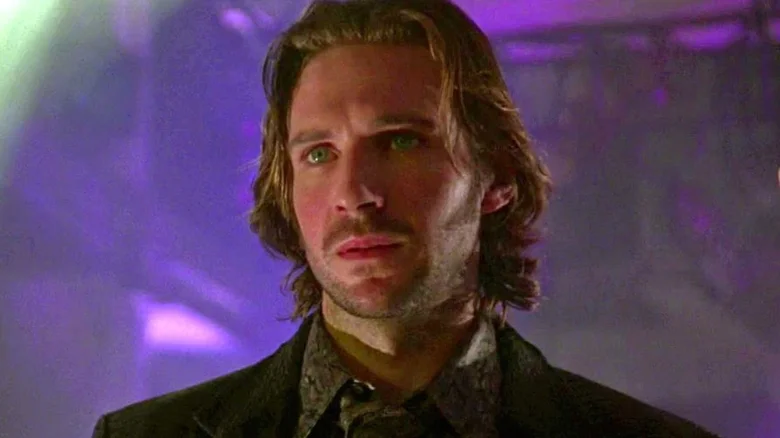
James Cameron, who co-wrote and produced the film, had the idea for "Strange Days" over ten years before his ex-wife Kathryn Bigelow made it. The film takes place in the near future of 1999, when corruption and crime are rampant in Los Angeles as the new millennium draws near. There is a market for violent memories, and society has started amusing itself with illicit technologies that let people relive recorded memories, including their bodily sensations. Before discovering a significant conspiracy connected to multiple extremely unsettling killings, former police officer Lenny Nero (Ralph Fiennes) went to selling memories. "Strange Days" is almost tough to view on streaming, which explains its relative obscurity almost 30 years after its premiere. The film, which combines neo-noir with a wide variety of social commentary about media and technological addiction and the widespread abuse of power, is regarded as the greatest cyberpunk movie of the 1990s. With first-person scenes that evoke the recorded recollections shown in the film, Bigelow gives the story a voyeuristic feel that immerses viewers in its graphic nature. "Strange Days" is Bigelow's underappreciated genre masterwork, a film that foreshadows the perils of the media we consume.
Solaris (2002)
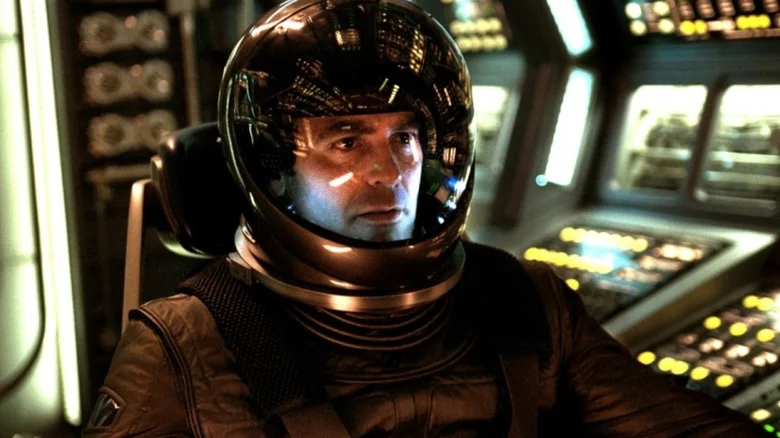
The 1961 Polish novel "Solaris" by Stanisław Lem was adapted twice in the Soviet Union, notably by famed Russian filmmaker Andrei Takovsky in 1972. But 30 years later, American filmmaker Stephen Soderbergh released his own rendition, a sci-fi picture starring George Clooney and produced by James Cameron. Clooney plays Chris Kelvin, a clinical psychologist tasked with investigating what happened to the crew of a space station orbiting the planet Solaris. When Kelvin arrives to the station, he discovers that many of the crew members have died or gone missing, while copies of loved ones, including Kelvin's late wife Rheya (Natascha McElhone), inexplicably materialize.
In addition to directing and scripting the 2002 film, Soderbergh served as cinematographer and editor on "Solaris," albeit under aliases. A passion project for the filmmaker, the film features Soderbergh at his most cerebral and cryptic, posing philosophical concerns without providing clear answers. The film also features Clooney in what is possibly his most sensitive performance, as his character overcomes guilt and loss when confronted with the mysteries of the namesake planet. "Solaris" is Soderbergh's most underappreciated picture to date. It is the type of sci-fi film that stays with spectators and makes them consider its consequences.
Belum ada Komentar untuk "5 Best Science Fiction Movies Nobody Talks About Anymore"
Posting Komentar